DoCorpo GuidePostoperative Care
The question is not when the swelling goes away, but what is normal at each stage. This timeline lets you tell an expected recovery apart from a sign that deserves a consultation.
The greatest source of anxiety after liposculpture is not pain: it is uncertainty. The body changes appearance several times during recovery, and without a reference for what is expected, any variation gets read as a problem. This timeline describes the usual course over the first three months. It is a guide only: your case depends on the areas treated, the technique used and your individual response, and only your medical team can assess your actual progress.
Days 1 to 3: the most uncomfortable point
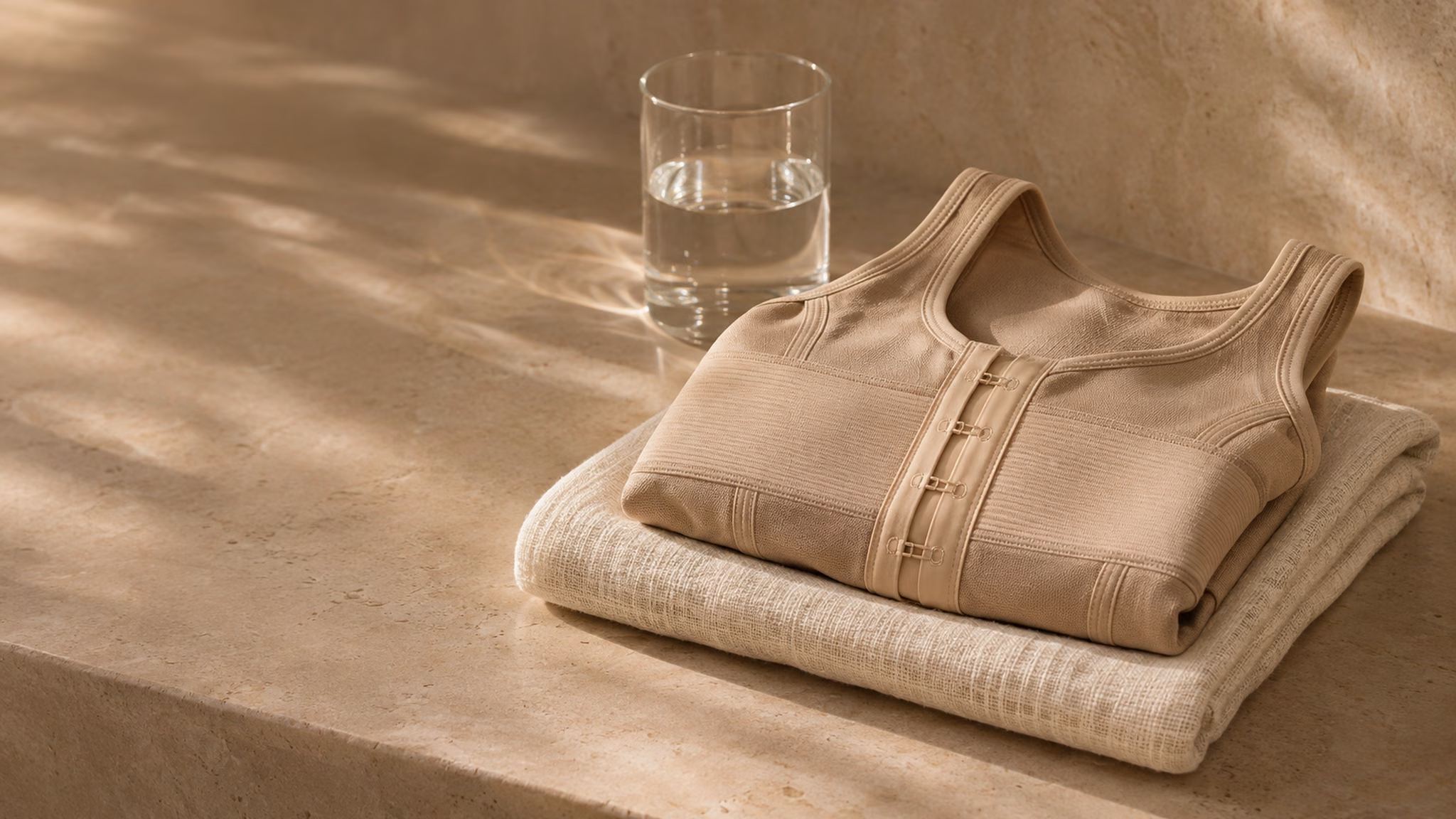
This is the stage of greatest discomfort, and also the shortest. Expect pain similar to an intense muscle strain, stiffness when moving and marked fatigue. There may be serosanguineous fluid draining from the incisions, which is normal and usually managed with dressings. The compression garment is worn continuously, and walking a little but often, around the house, is part of the treatment: it reduces the risk of circulatory complications.
Days 4 to 7: the bruising appears
Pain begins to ease and turns into tenderness to the touch. Bruises often become more visible before they start to fade, and may travel downward under gravity: seeing a bruise in an area that was not operated on is common. Many patients begin lymphatic drainage massage during this period, if their doctor recommends it.
Week 2: a partial return to routine
This is usually when sutures are removed, if the technique requires them, and when desk work or work without physical effort can resume. Swelling is still present and is often more noticeable at the end of the day than in the morning. The compression garment remains part of daily life.
Weeks 3 and 4: the stage that confuses people most
This is where what surprises almost everyone shows up: hardened or irregular areas, with a sensation of lumps under the skin. This is fibrosis, a normal response of healing tissue, and it is precisely what massage and the compression garment aim to modulate. Altered skin sensitivity is also common, with numb or tingling areas. This is not the final result.
Weeks 5 to 8: the shape starts to show
Swelling subsides more noticeably and the contour begins to define itself. This is usually when exercise can be resumed progressively, starting with low-impact activity and always as medically advised. Irregularities keep improving, though not in a straight line: better and worse days are normal.
Weeks 9 to 12: consolidation
By the third month most of the swelling has settled and the shape is fairly representative, although the tissue is still reorganising. The scars, which are small with this technique, shift from a reddish tone to a lighter one over the following months. Full tissue maturation can take between six and twelve months.
What speeds recovery up and what slows it down
Some factors really are in your hands:
- Wearing the garment as instructed: not tighter, but for the time indicated.
- Moving from day one: short, frequent walks, without effort.
- Hydration and adequate protein intake: tissue heals with raw material.
- Not smoking: tobacco compromises tissue oxygenation and healing.
- Keeping up the prescribed massage, without improvising intensity.
- Sleeping enough and not resuming exercise before medical clearance.
Signs that justify contacting your medical team
Seek advice immediately if you develop a fever, pain that increases rather than decreases, spreading redness, foul-smelling discharge, an area that is hot and very painful, difficulty breathing, or marked pain and swelling in just one leg. None of these is part of a normal recovery, and in almost every case reaching out early makes the solution simpler.
Conclusion
Recovery from liposculpture is not a straight line toward the result: it is a sequence of stages that look different from one another. Knowing what belongs to each week reduces anxiety and, above all, lets you recognise what does not fit. At DoCorpo scheduled follow-up exists precisely to accompany that progress and adjust care to your individual response.