DoCorpo GuideScar Healing
Technique determines where the scar sits and under how much tension. How it ends up looking depends, to a large extent, on what you do over the following months.
There is a widespread belief that a scar is entirely the surgeon's responsibility. It is half true. Technique determines the location of the incision, its length, the tension it is placed under and how the deep layers are closed: that is decisive and not in your hands. But a scar is not formed on the day of surgery — it forms over the following twelve to eighteen months. And during that period there are variables that depend directly on you.
How a scar actually forms
Healing moves through successive phases. First an inflammatory stage lasting days, then a proliferative phase in which the body produces collagen abundantly and somewhat disorganised, and finally a remodelling phase that can last more than a year, in which that collagen reorganises and the scar flattens and lightens. This explains something that puzzles many patients: a scar often looks worse between the first and third month than it did in the first week. That is not deterioration; it is the proliferative phase doing its work.
1. Don't smoke
This is the modifiable factor with the greatest impact. Tobacco causes vasoconstriction and reduces the oxygen reaching the tissue under repair, which increases the risk of edges healing poorly, opening or becoming infected. Vaping with nicotine shares the mechanism. The usual recommendation is to stop weeks before surgery and to stay stopped throughout recovery.
2. Protect the scar from the sun
A young scar exposed to ultraviolet radiation can become persistently hyperpigmented, and that discolouration is far harder to correct later than to prevent. Protection continues for months: cover with clothing where possible and, over fully closed skin, use a broad-spectrum, high-factor sunscreen and reapply it. It is one of the highest-yield measures and one of the most neglected.
3. Avoid tension on the area
A scar under traction tends to widen. Resuming exertion, lifting weight or stretching the area before medical clearance also stretches the tissue being formed, and that widening does not reverse. Activity restrictions are not a generic precaution: they directly protect the final appearance of the scar.
4. Follow the prescribed topical treatment
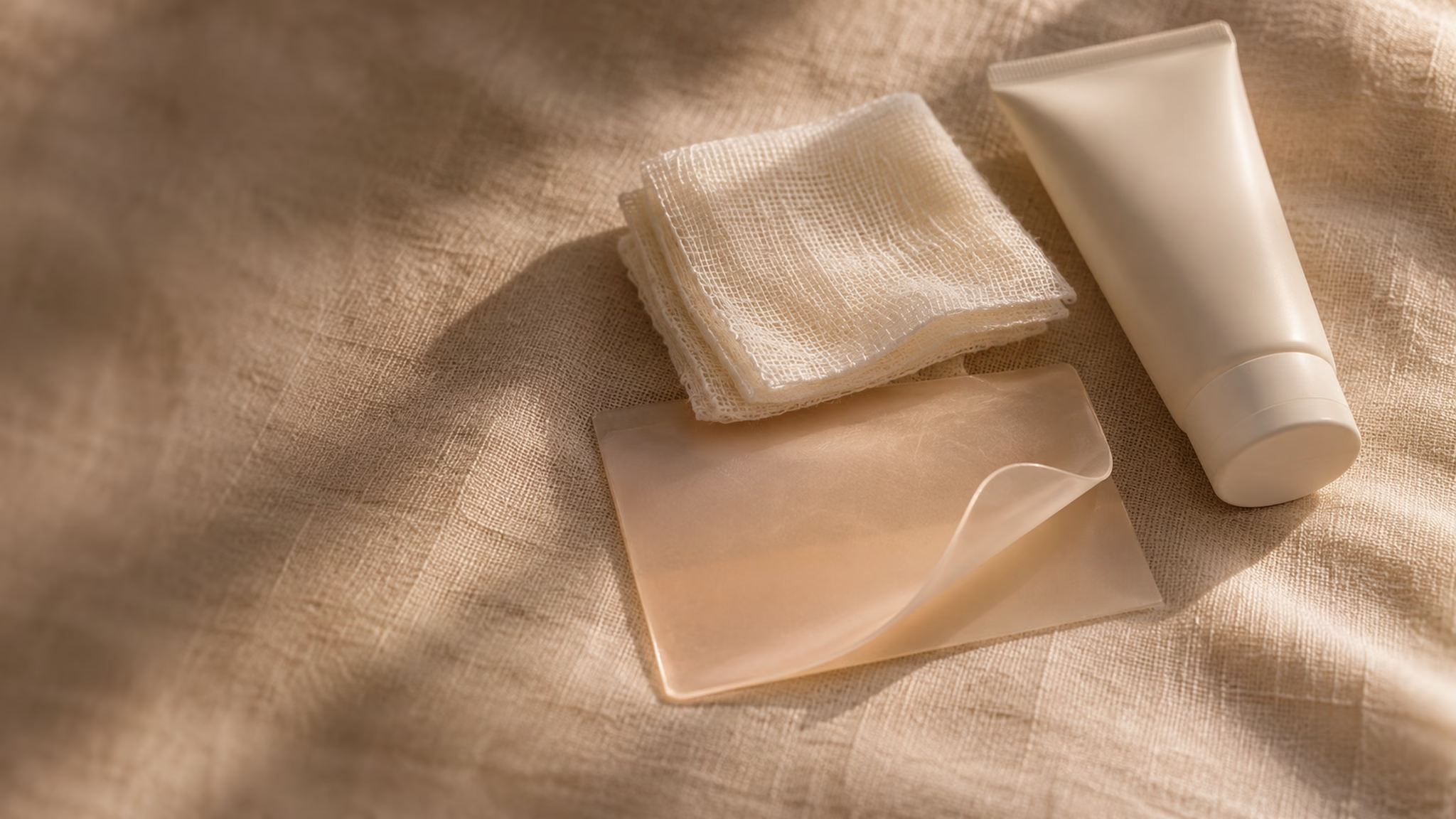
Depending on the case, your medical team may prescribe silicone sheets or gels, supportive taping, or massage over the scar once it has closed. What matters is consistency: these treatments work through sustained use over months, not occasional application. And it is best not to improvise: creams, oils or home remedies applied to a wound that has not yet closed can irritate the tissue or introduce infection.
5. Eat enough protein
Collagen is built from raw material. An adequate protein intake, together with vitamin C, zinc and iron from a balanced diet, supports the repair process. This is not about supplementing on your own initiative, but about not healing in deficit. If you are in a period of marked weight loss, it is worth mentioning before surgery.
6. Keep your weight stable during recovery
Significant weight changes in the following months alter the tension of the skin over the scar and can change its appearance. The recovery period is not the time for an aggressive diet or for rapid gain: stability favours remodelling.
7. Seek advice early at any sign
A scar that becomes increasingly red, raises, itches persistently or widens can respond to conservative treatment if addressed in time. Waiting for it to «settle on its own» reduces the options. Consulting early is itself a factor you control.
What is not in your hands
This deserves equal clarity, because it prevents unnecessary guilt:
- Genetics: largely determines how you heal.
- Skin type and tone: influence the risk of pigmentation and of raised scars.
- Location: shoulders, chest and back are areas of greater tension and poorer scar prognosis than others.
- Age: tissue response varies across a lifetime.
- A history of keloids or hypertrophic scars, which raises the likelihood of repeating them.
If you have had a poor scar before
Say so during the assessment and, if you can, show it. A history of keloid or hypertrophic scarring changes concrete decisions: the choice of incision, the closure technique and the use of preventive treatments from the outset. It is valuable clinical information, not a minor detail.
Conclusion
A scar is the result of a collaboration that extends well beyond the operating room. The surgeon sets the initial conditions; your behaviour during the months of remodelling defines much of the rest. No scar disappears completely, but the difference between a discreet scar and a problematic one usually lies in these factors. At DoCorpo scar care is part of the follow-up plan, with instructions adapted to your skin type and the area operated on.